Calgary Homeowner Article
Road Crush & Crushed Gravel in Calgary: Base Prep, Placement & Compaction Guide
Crushed gravel and road crush solve different yard-prep problems. Crushed gravel can be used as a cleaner functional yard or side-yard surface, while road crush is often used as a compacted base for a future landscape, patio, or hardscape phase. The result depends on preparation, access, material placement, grading, leveling, and compaction where required.
What Is the Difference Between Crushed Gravel and Road Crush?
Crushed gravel is often used as a functional surface or finish layer in yard areas, side yards, and access paths. Road crush is a base material that is commonly spread, graded, and compacted when the goal is to prepare a firmer base for a future landscape or patio phase. The right choice depends on whether the area needs a finished gravel surface, a compacted base, or preparation for another contractor.
This guide is focused on functional gravel and base material work. It does not replace a structural design, a patio installer specification, or a contractor's base requirement for a specific finished surface.
When Crushed Gravel Makes Sense
Crushed gravel can be useful when the goal is a practical surface rather than a decorative rock bed. It can clean up a backyard or side-yard area, create a utility strip, or finish a prepared surface after rough material has been removed.
For broad grading and leveling planning, read the grading guide . This article only uses grading as the preparation step before gravel or base material is placed.
Functional Use
Functional yard surface
Crushed gravel can create a cleaner, more practical surface for backyard, side-yard, and utility areas after the ground has been prepared.
Functional Use
Access strips and side yards
It can work well in areas that need a durable walking or equipment access surface rather than turf or decorative planting.
Functional Use
Surface refresh after prep
Gravel placement often comes after old material is removed and the exposed surface is shaped or leveled enough for the planned finish.
Functional Use
Customer-supplied material
Customer-supplied crushed gravel can be placed and spread when the material, delivery point, access, and scope are confirmed in advance.
When Road Crush Base Prep Makes Sense
Road crush base preparation makes sense when the area needs a firmer prepared base before a future landscape, patio, or hardscape phase. The work may include spreading, grading, leveling, and compaction, but the final requirements depend on the contractor plan and the agreed scope.
A recent Road Crush Base Installation project included sod and topsoil removal, excavation, rough grading, final leveling, road crush spreading, grading, and mechanical compaction for a future landscape or patio phase.
Base Prep
Base preparation
Road crush is often used when the goal is a firmer base for a future landscape, patio, or hardscape phase.
Base Prep
Spread, grade, level, compact
A road crush scope may include spreading the material, grading it across the work area, leveling the surface, and mechanical compaction.
Base Prep
Removal before placement
Sod, topsoil, or other organic surface material may need to be removed before road crush is placed.
Base Prep
Project-specific requirements
The right preparation depends on the contractor plan, intended next phase, finished elevation, access, and whether compaction is included.
What Needs to Happen Before Gravel or Road Crush Is Placed?
The preparation depends on what is already in the area and what the next phase needs. Some projects only need shaping before crushed gravel is placed. Others need removal, excavation, road crush placement, grading, and compaction.
For deeper planning on what to remove before new yard work, use the landscaping site prep guide . For old lawn or organic topsoil specifically, see the sod and topsoil removal guide . If the area needs to be lowered or soil removed, compare the backyard excavation guide before finalizing the scope.
Prep Step
Remove organic material
Sod, topsoil, weeds, or other organic material may need removal before a base or gravel surface is built.
Prep Step
Review old loose material
Old gravel, mixed rock, or rough material may need to be removed or separated if it blocks a clean surface.
Prep Step
Lower the area if needed
Some road crush or base scopes need excavation so the finished surface can land at the planned elevation.
Prep Step
Rough grade the work area
The exposed area may need basic shaping before new aggregate is spread.
Prep Step
Final level before material
A cleaner surface helps gravel or road crush spread more evenly across the intended work area.
Prep Step
Place and spread material
Crushed gravel or road crush is moved from the delivery or stockpile location into the backyard, side yard, or work area.
Prep Step
Grade the aggregate
The placed material is shaped across the surface so it matches the planned finish or handoff.
Prep Step
Compact when required
Road crush is often mechanically compacted when it is part of a base-preparation scope.
Prep Step
Clean up and hand off
Final cleanup, staging, and contractor handoff should be confirmed before scheduling the work.
Two Calgary Project Examples: Gravel Finish vs. Road Crush Base
These two project pages show the difference between crushed gravel as a functional finished surface and road crush as a compacted base-preparation scope.
Project Proof
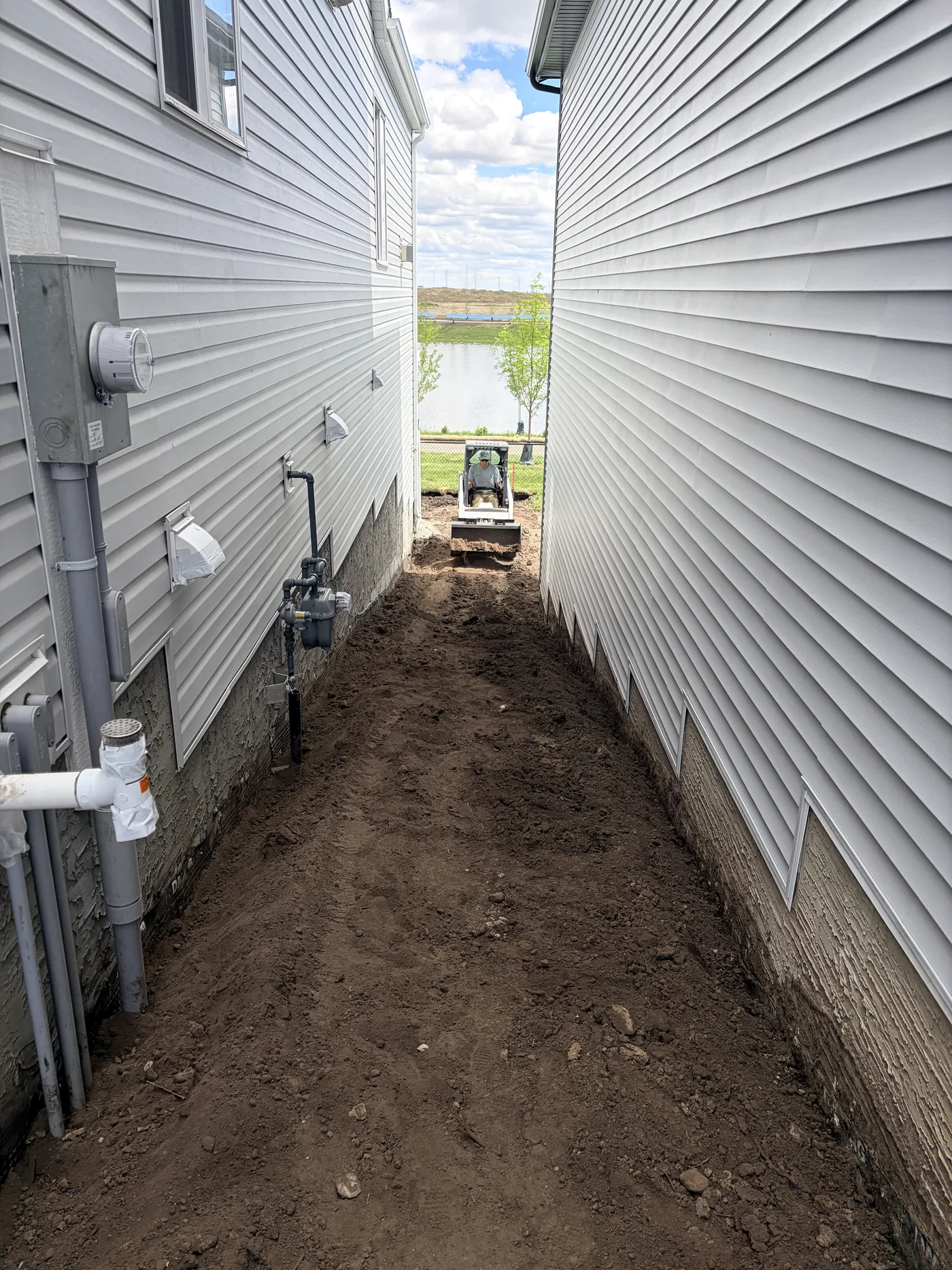
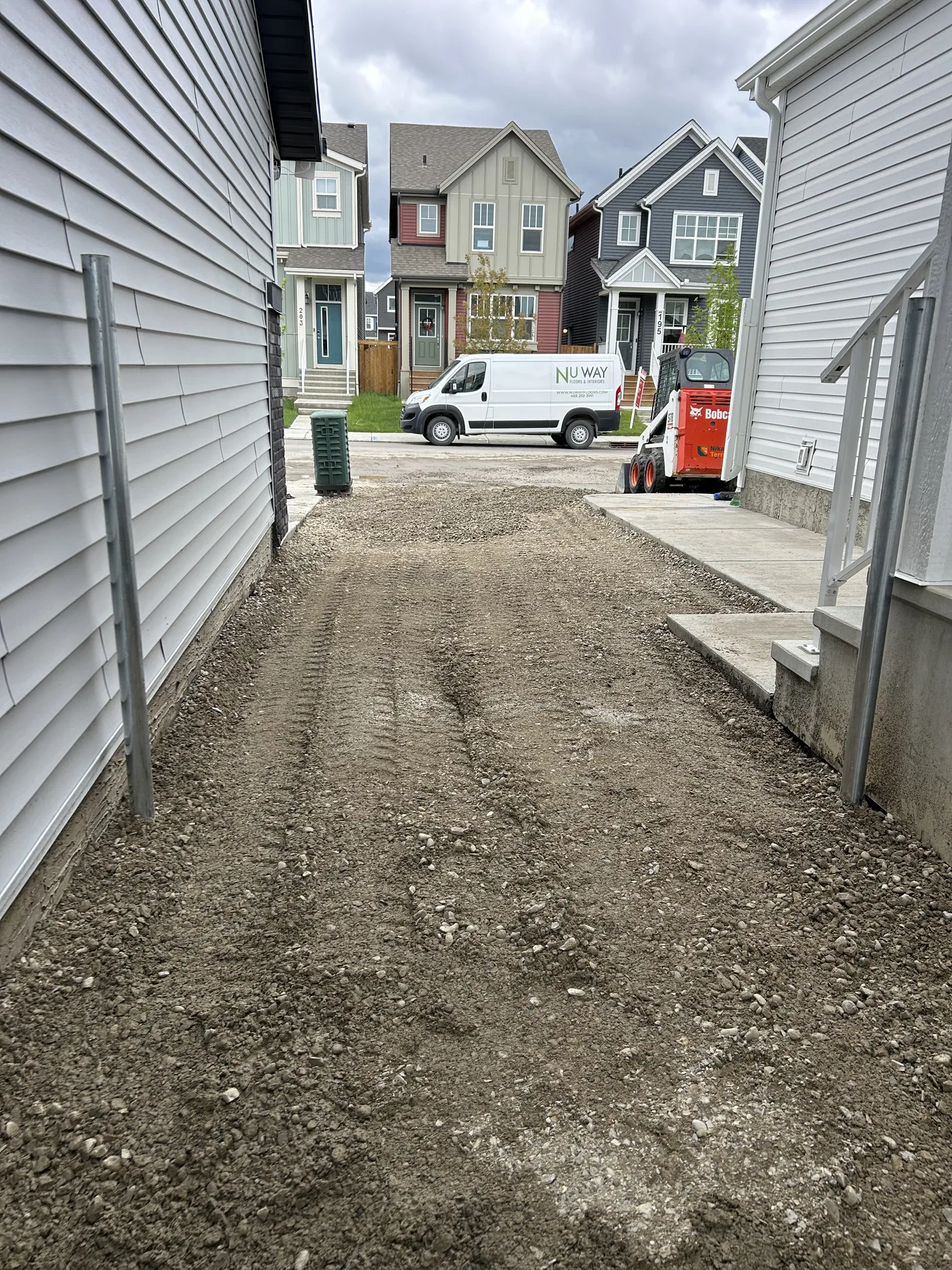
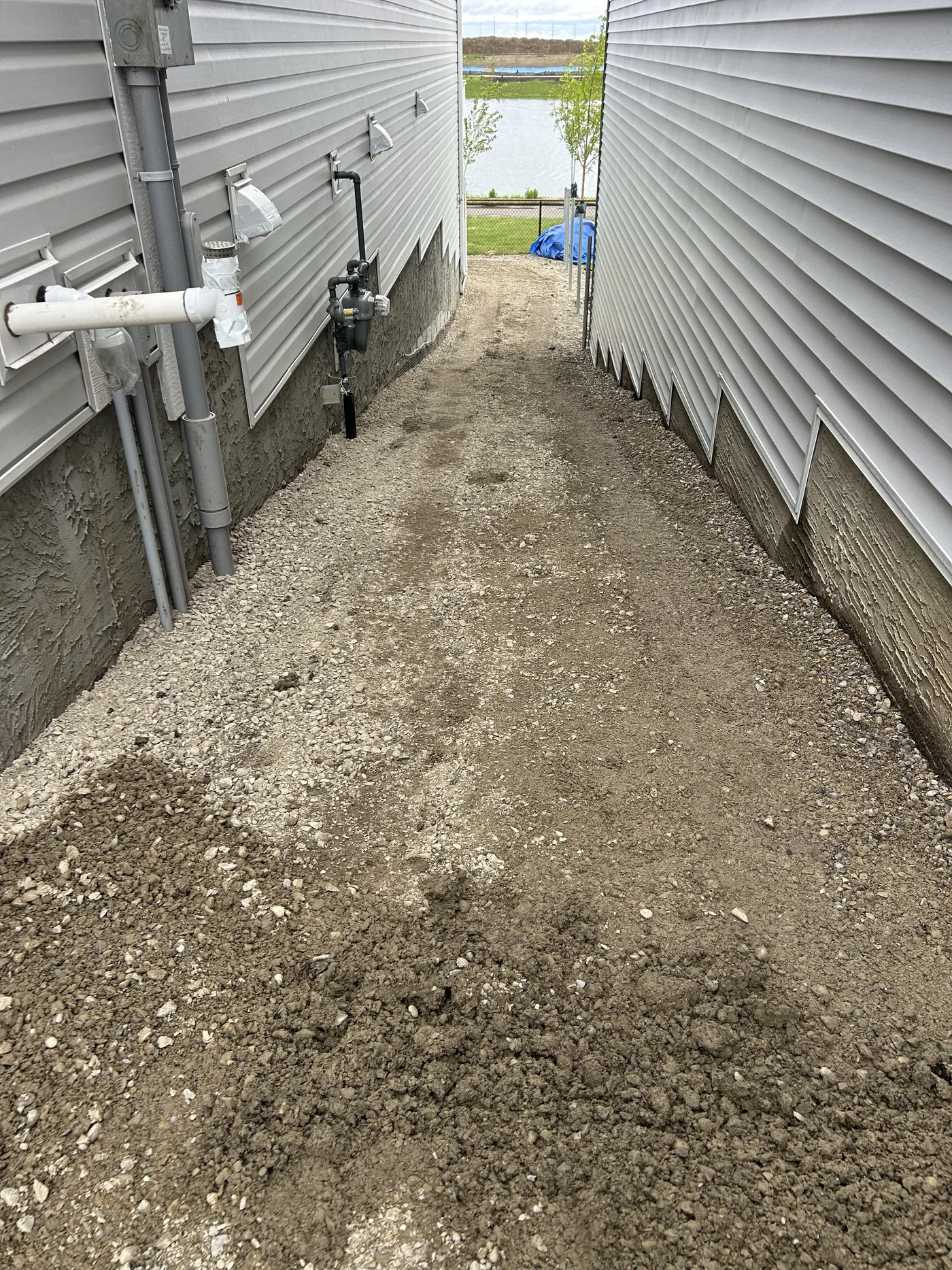
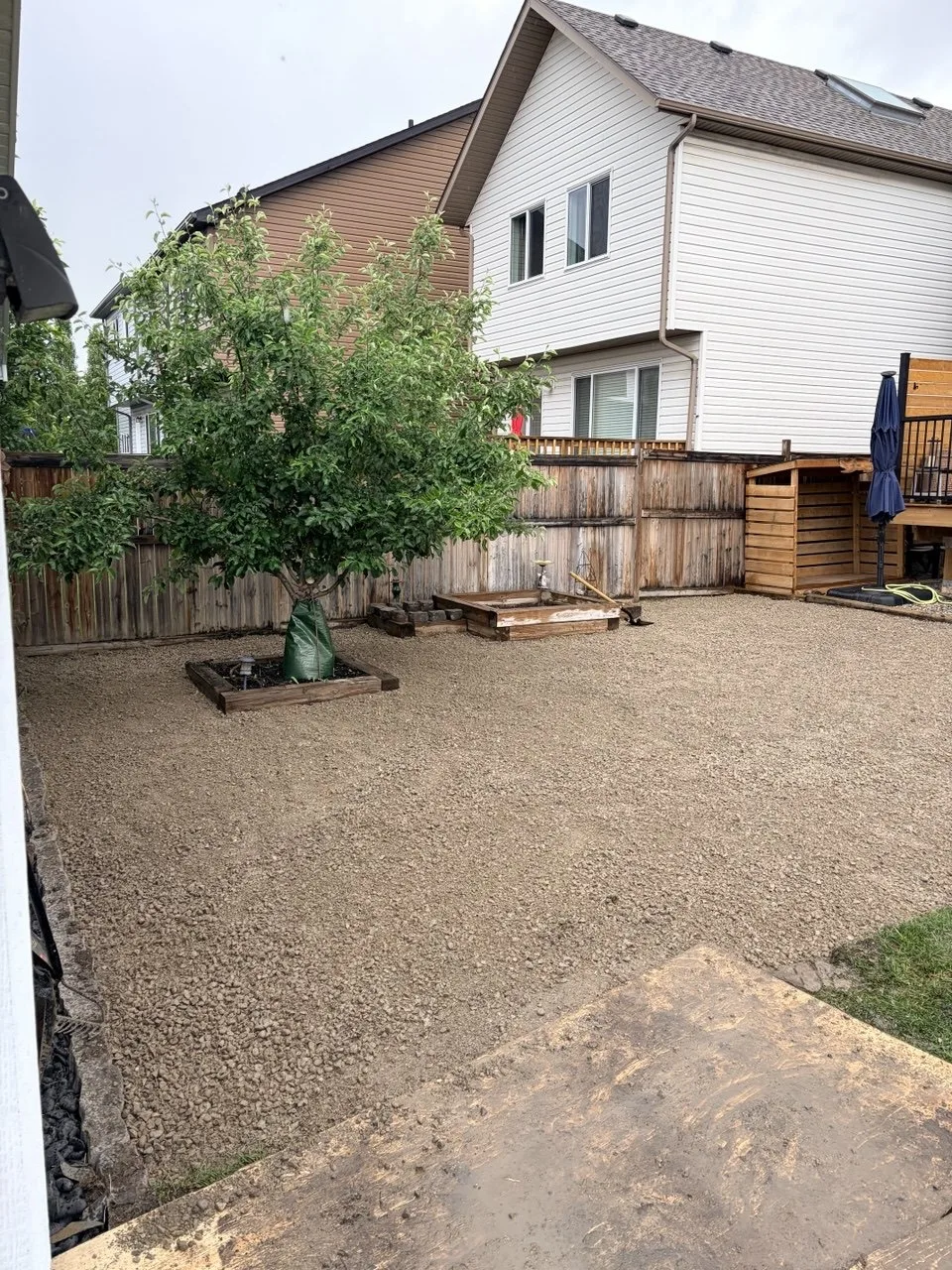
Backyard & Side-Yard Gravel Grading
A Calgary backyard and side-yard gravel grading project where Nika Terra shaped drainage and placed customer-supplied crushed gravel across prepared surfaces with compact equipment.
View project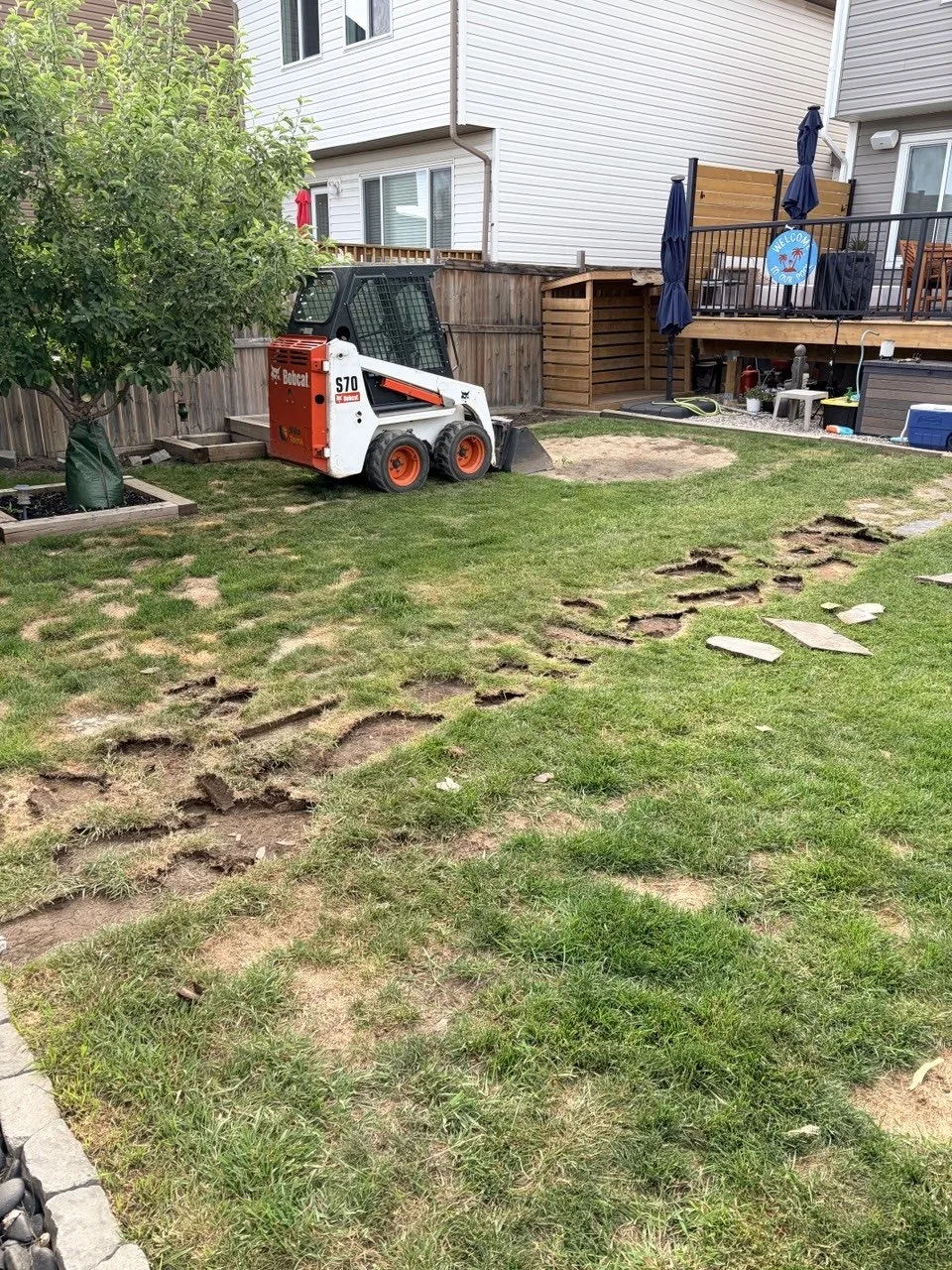
Project Proof
Road Crush Base Installation
A Calgary backyard project where existing sod and topsoil were removed, the area was excavated, rough graded, final leveled, finished with road crush, and mechanically compacted for a future landscape or patio phase.
View projectCrushed Gravel, Road Crush and Decorative Rock Are Not the Same
Crushed gravel and road crush are functional aggregate materials. Crushed gravel can be used as a practical surface depending on the area and scope. Road crush is more about base preparation and compaction before a later finish or contractor handoff.
Decorative rock is usually selected for appearance and low-maintenance landscape finish, often with weed barrier and more aesthetic placement. This guide stays focused on functional gravel surfaces, road crush base prep, and material handling.
Why Access Matters for Gravel and Road Crush Placement
Gravel and road crush are heavy materials. Access affects how the aggregate gets from the delivery or stockpile point into the backyard, side yard, patio area, or future landscape area.
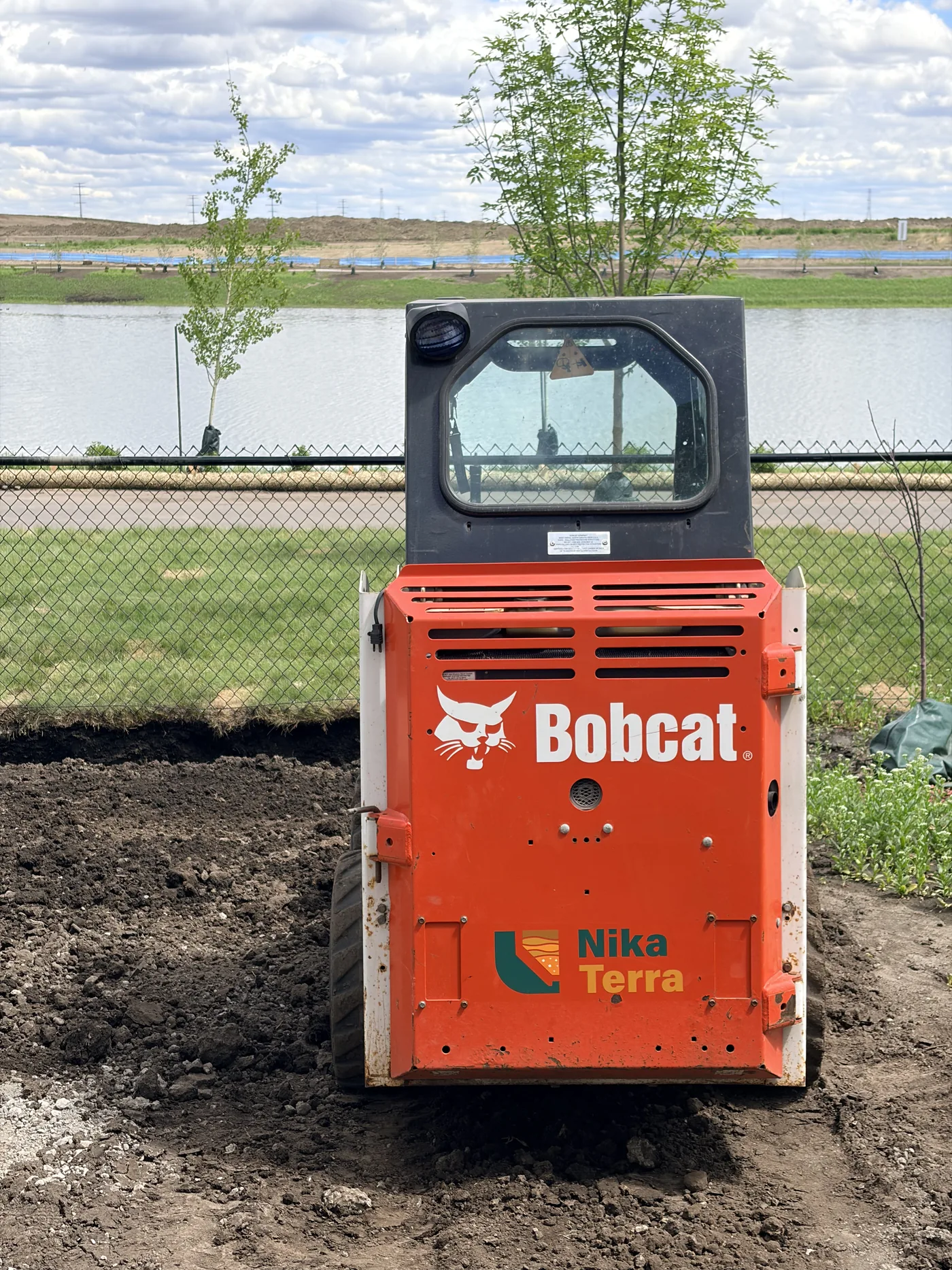
Compact equipment can help move and spread material where full-size equipment may not fit, but the path still needs review. For route planning and access factors, read the backyard access guide .
- Where the aggregate will be delivered or stockpiled
- Distance from the stockpile to the backyard, side yard, or work area
- Gate width or narrowest access point
- Turns, slope, soft ground, and surface transitions
- Driveways, patios, lawns, fences, and finished surfaces along the route
- Room for equipment, trailer access, material staging, and cleanup
What Affects Gravel or Road Crush Cost?
Gravel placement and road crush base prep are priced from the actual site and scope. Material type, access, removal, excavation, grading, compaction, and cleanup can all change the plan.
If the main issue is shaping or leveling the surface, start with the grading and leveling service . If old sod, topsoil, or rough material needs removal before aggregate arrives, compare landscaping site prep as part of the quote route.
- Work area size
- Material type: crushed gravel vs. road crush
- Whether material is customer-supplied or needs to be discussed in the quote
- Delivery or stockpile location
- Distance from the stockpile to the work area
- Backyard or side-yard access
- Whether sod, topsoil, old gravel, or debris must be removed
- Whether excavation or lowering is required
- Grading and leveling requirements before or after placement
- Whether mechanical compaction is included
- Cleanup and contractor handoff expectations
Helpful Info for a Faster Gravel Base Estimate
The quote form only needs contact details, service type, address or neighbourhood, and a short description of the gravel or base-prep work. When you request a free estimate , add any material, stockpile, access, compaction, or next-phase details you already know:
- Access path from street or driveway to the work area, if relevant
- Gate width or narrowest access point, if known
- Approximate area size, if known
- Planned material: crushed gravel, road crush, or another aggregate
- Whether the material is already supplied or needs to be discussed
- Where material will be delivered or stockpiled
- Whether old sod, topsoil, gravel, or debris must be removed
- Whether compaction is needed
- The next phase: finished gravel surface, future patio, future landscaping, contractor handoff, or another use
- Preferred timing
Need Crushed Gravel or Road Crush Base Prep in Calgary?
Nika Terra helps Calgary homeowners with compact-equipment gravel placement, road crush base preparation, sod and topsoil removal, excavation, grading, leveling, material handling, and compaction where required by the scope. Start with the quote form and describe the access path, work area, material plan, and intended next phase.
Common Questions
Frequently Asked Questions
What is road crush used for? +
Road crush is commonly used as a base material that can be spread, graded, leveled, and compacted for a future landscape, patio, or hardscape phase. The exact preparation depends on the project scope and the planned finished surface.
Is road crush the same as crushed gravel? +
Not exactly. Crushed gravel is often used as a functional surface or finish layer, while road crush is usually used as a compacted base material. The right material depends on whether the goal is a finished gravel surface or a prepared base for future work.
Do you install road crush in Calgary backyards? +
Yes. Nika Terra can help with road crush base preparation in Calgary yards where access and site conditions allow, including removal, excavation, grading, leveling, spreading, and compaction when included in the scope.
Can you place customer-supplied crushed gravel? +
Often, yes. Customer-supplied crushed gravel can be placed and spread when the material, access, stockpile location, and project scope are confirmed before scheduling.
Does gravel need grading first? +
Usually, the area should be shaped or leveled before gravel or road crush is placed. The amount of grading depends on the existing surface, drainage direction, material type, and planned finish.
Does road crush need compaction? +
Road crush is often mechanically compacted when it is being used as a base material. Whether compaction is included depends on the project scope and the intended next phase.
Can compact equipment move gravel into a backyard or side yard? +
Often, yes. Compact equipment can move gravel or road crush into many Calgary backyards and side yards, but access depends on gate width, turns, slope, soft ground, finished surfaces, and staging space.
What needs to be removed before road crush is installed? +
That depends on the project. Existing sod, topsoil, old gravel, organic material, or unsuitable surface material may need to be removed before excavation, grading, road crush placement, and compaction.
How much does crushed gravel or road crush base prep cost in Calgary? +
Cost depends on area size, material type, access, stockpile location, removal needs, excavation, grading, leveling, compaction, and cleanup expectations. Final pricing is confirmed after reviewing the site and project scope.
Is decorative rock the same as road crush? +
No. Decorative rock is usually chosen for appearance and low-maintenance landscape finish. Road crush is usually a base material that is spread, graded, and compacted before another finished surface or future project phase.